
If I Only Could, I'd Make a Deal With God
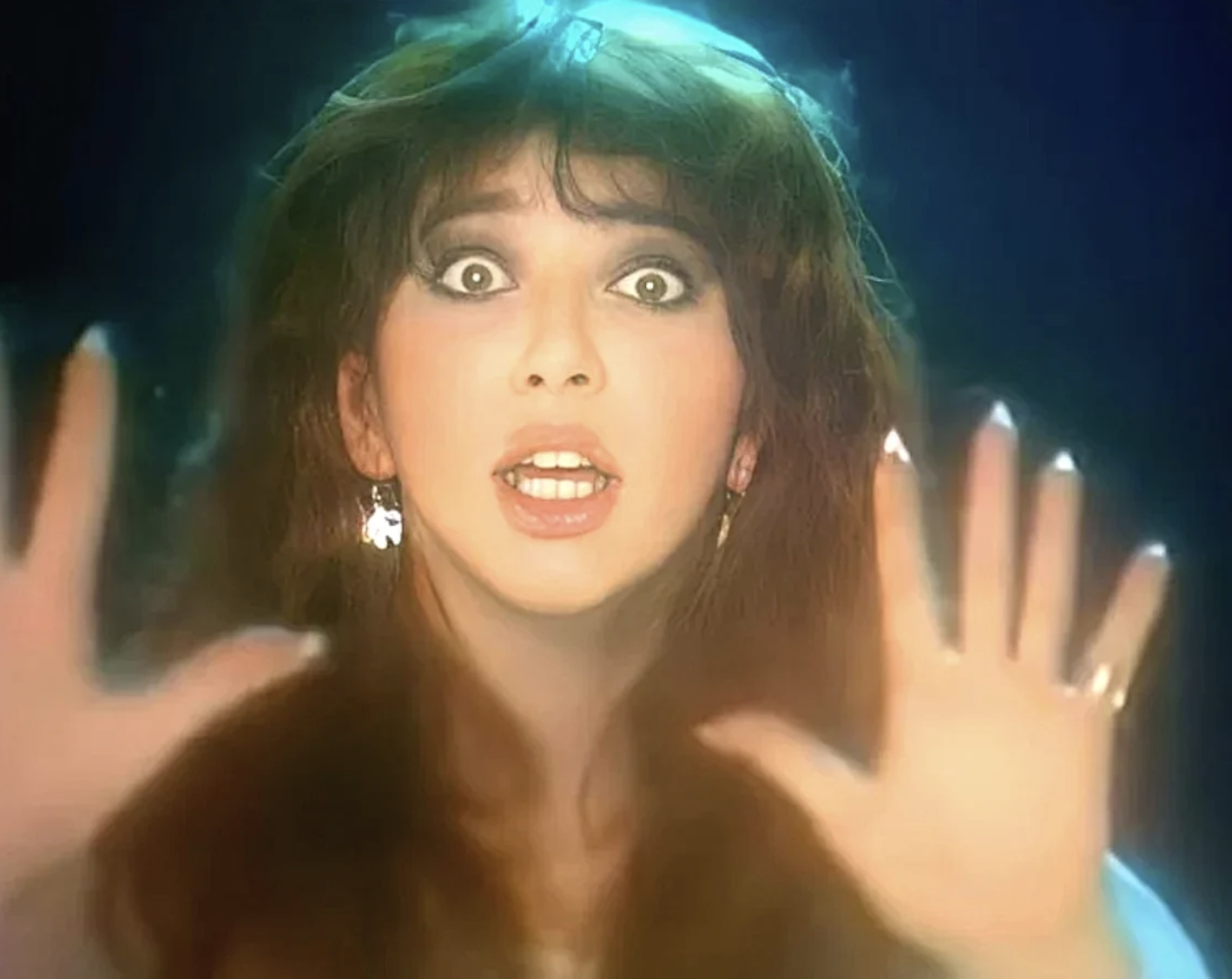
These famous words from Kate Bush’s hit “Running Up That Hill” first introduced many listeners to her in 2022, when the song received renewed attention after appearing in Netflix’s popular series, Stranger Things. A new generation of listeners was initiated into the quirky world of UK singer-songwriter and dancer, Kate Bush.
“I found a book on how to be invisible
On the edge of the Labyrinth
Under the veil you must never lift
Pages that you must never turn
In the labyrinth
You stand in front of a million doors
And each one holds a million more
Corridors that lead to the world of the invisible...”
Kate Bush, were you in my dreams?
You know the one. I was running through endless hallways and corridors. Up and down endless stairs that led nowhere, only arriving into more hallways and corridors. Doors lined these hallways. Doors, everywhere. But every time I opened one and crossed a threshold, I found more stairways, corridors, and doors. Trapped inside this labyrinth, I desperately sought some stable hold on reality, some solid ground on which to plant my two feet. Later, when I read Kate’s words, they said, Ah, yes, I know. That recognition in the other, of the self. That full circle. Ah, yes, I’ve been there.
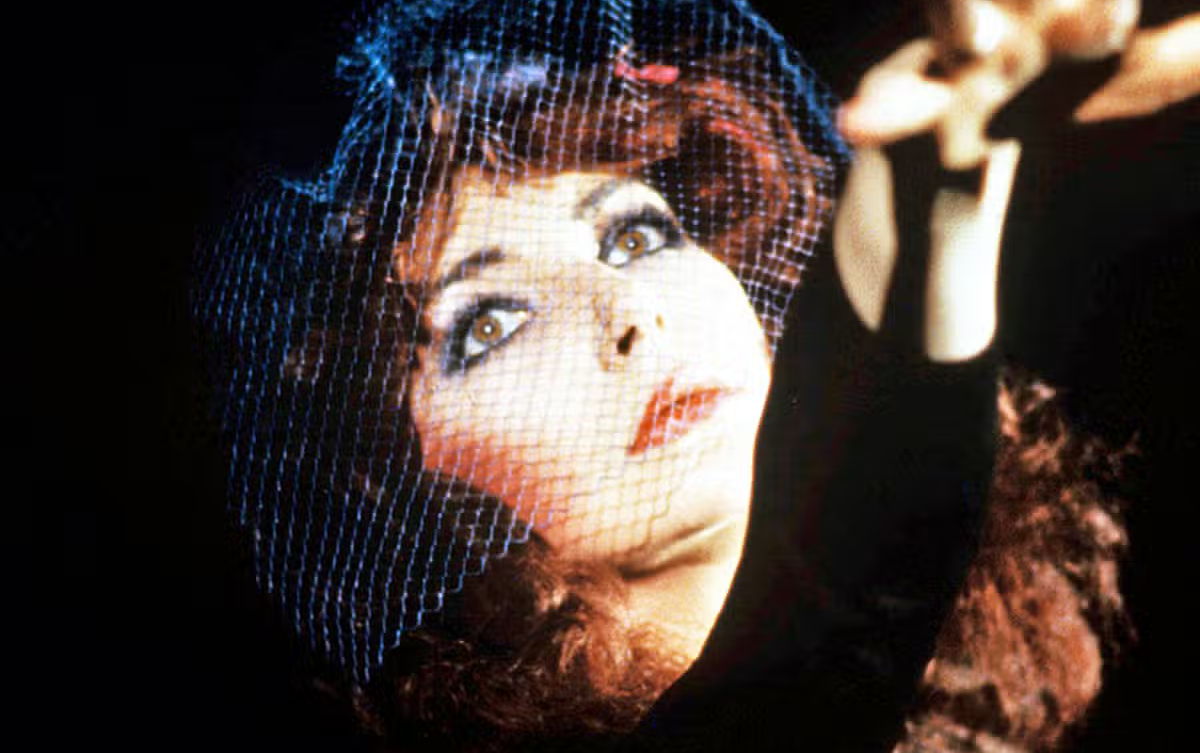
Photo: Fotex/Shutterstock
Kate Bush is a poet. Her book How to Be Invisible, ostensibly a compilation of selected lyrics, is secretly a book of poetry. And her work, in many ways, is an experiment in the art of possession—a subtle art, which every fiction writer knows well. The art of losing yourself so wholeheartedly that afterward, in the face of your creation, half in awe, half in dread, you stand back and pronounce, “It’s alive!”
In Kate’s case, her artistic intention is to fully inhabit something—a character from a story, a memoir, a movie, or even just one tiny little snowflake:
“I was born in a cloud
Now I am falling, I want you to catch me
Look up, and you’ll see me, you know you can hear me
The world is so loud, keep falling, I’ll find you...”
Let's visit some of my favorite of her possessions.
Wuthering Heights
The first song of Kate’s I personally fell in love with was her debut song, “Wuthering Heights.” This song single-handedly lifted her to the top of the UK Singles Chart at the age of nineteen. Anyone who has curled up with a blanket and this old, stormy, Victorian gothic novel by Emily Brontë on a grim winter night can appreciate this song’s full fun. The song is about the ghost of Cathy haunting her lover Heathcliff.
“Heathcliff, it’s me, I’m Cathy
I’ve come home, I’m so cold
Let me in your window...”
Kate is playing, pretending with the heart of a child so possessed by imagination as to half-believe her playing come true. An adult still playing, but only now taking her playing much more seriously.
“Serious play?” you might object. “Isn’t that a contradiction?”
Maybe.
But it’s a contradiction any creative artist or writer must live and ultimately reconcile with. Kate has made that reconciliation her art, combining childlike imagination and disciplined professionalism.
Babooshka
Another favorite of mine is Kate’s “Babooshka.” This song tells the tale of a woman seeking to regain intimacy with her estranged husband. Not knowing what to do, this woman starts sending her husband “scented letters” through the mail that he receives with a “strange delight.” This mysterious woman, he thinks, reminds him of his wife, but how she was before the years drew by, how she was when she was beautiful...
“She wanted to test her husband
She knew exactly what to do:
A pseudonym
To fool him.
She couldn’t have made a worse move...”
What unfolds with this song is a liaison between a man and his own wife, a woman whose identity is now veiled in mystery. Through their correspondence, the man falls back in love with her. They agree to meet in person. Uncanny, he goes to set eyes on her...
This Woman’s Work
In the complex, cutthroat world of the 1980s and 90s music industry, Kate took the fate and freedom of her own work in hand, becoming (along with everything else) a business woman. To retain artistic integrity, she created her own publishing company, Kate Bush Music, and management company, Novercia, placing herself along with various family members on the board of directors.
In 1994, Kate went silent. Dropped out of the public eye. There were whispers she had become a recluse. Certainly, she’d always been a tad eccentric. Then in 1998 Kate gave birth to a son with guitarist Dan McIntosh, whom she remains married to, to this day.
A creative career. Business aptitude. The personal fulfillment of family. Can a woman do all three? Kate's answer seems to be: yes. But how?
On that theme, I’ll end with possibly her most beautiful and haunting song: "This Woman's Work." A ballad to those in our lives who often unintentionally get left behind when the passion and peril of creativity runs its course. Those we could never do without. A song that should resonate with any woman—whether she’s a creative artist, navigating a demanding career, or a mother. Perhaps all three.
“Pray God you can cope
I’ll stand outside
This woman’s work
This woman’s world
It’s hard on the man...”
This last video concludes my artist’s ode to a woman whose songs have sung to my soul, whose work inspires me in the continuing search, the continuing conversation of the Creative Life —seeking that elusive door out of the labyrinth, running up that hill, striking deals with God.
Further Watching
I recommend these other unforgettable videos:
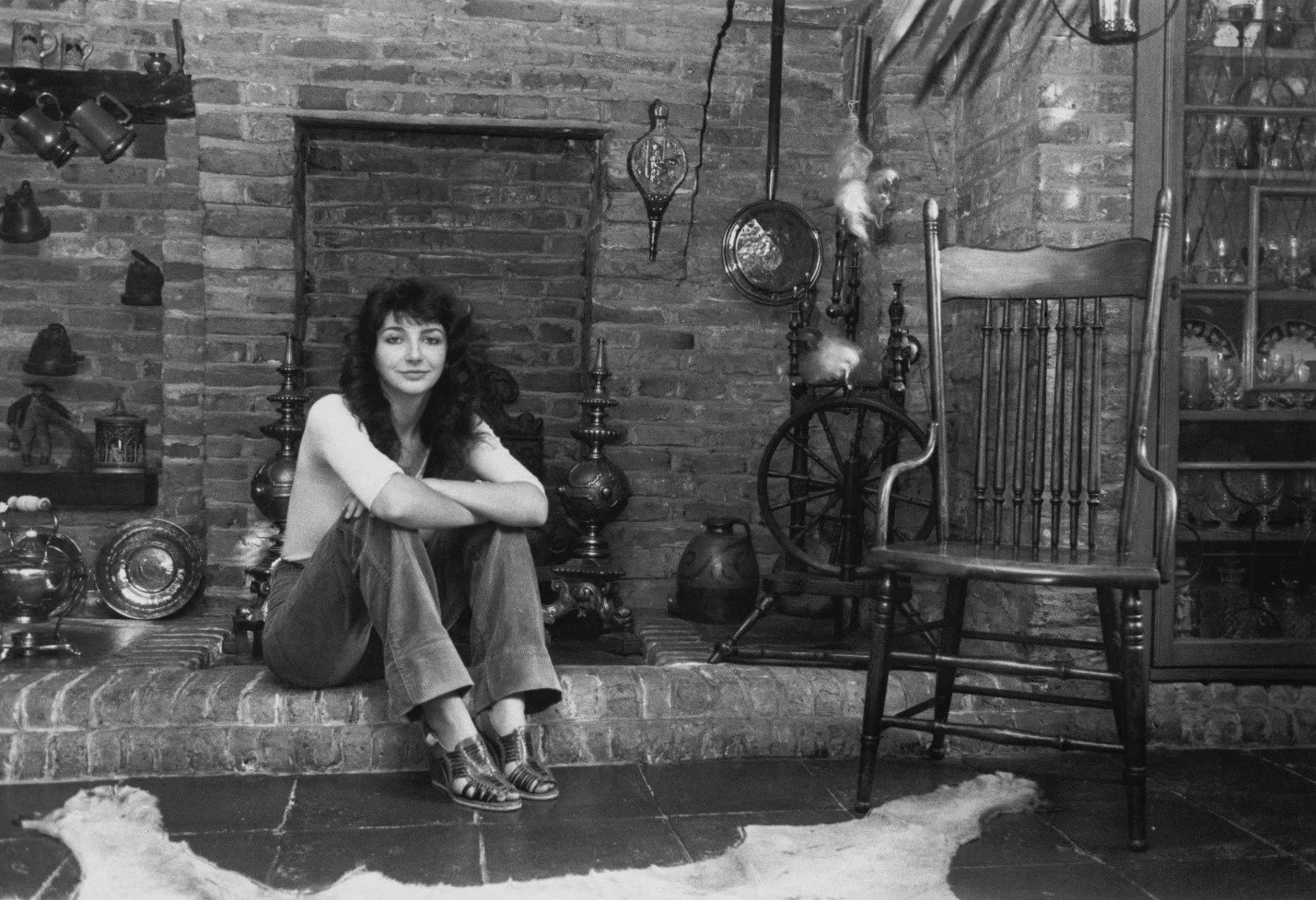
Photo: Chris Moorhouse/Getty Images
"Cloudbusting": inspired by Peter Reich's moving memoir A Book of Dreams, about his father—the controversial Austrian psychoanalyst, Wilhelm Reich.
"Breathing": a expression of nuclear anxiety.
"The Sensual World": a reimagining of Molly Bloom's soliloquy from James Joyce's Ulysses.
"The Man With the Child In His Eyes": written when Bush was only thirteen.
Read more about Kate on Wikipedia.
This essay was originally published in Fjords Review, 2024. Read on Fjords →